










Revolutionizing Lightning Protection: How Deionization Technology Is Transforming Critical Infrastructure Safety
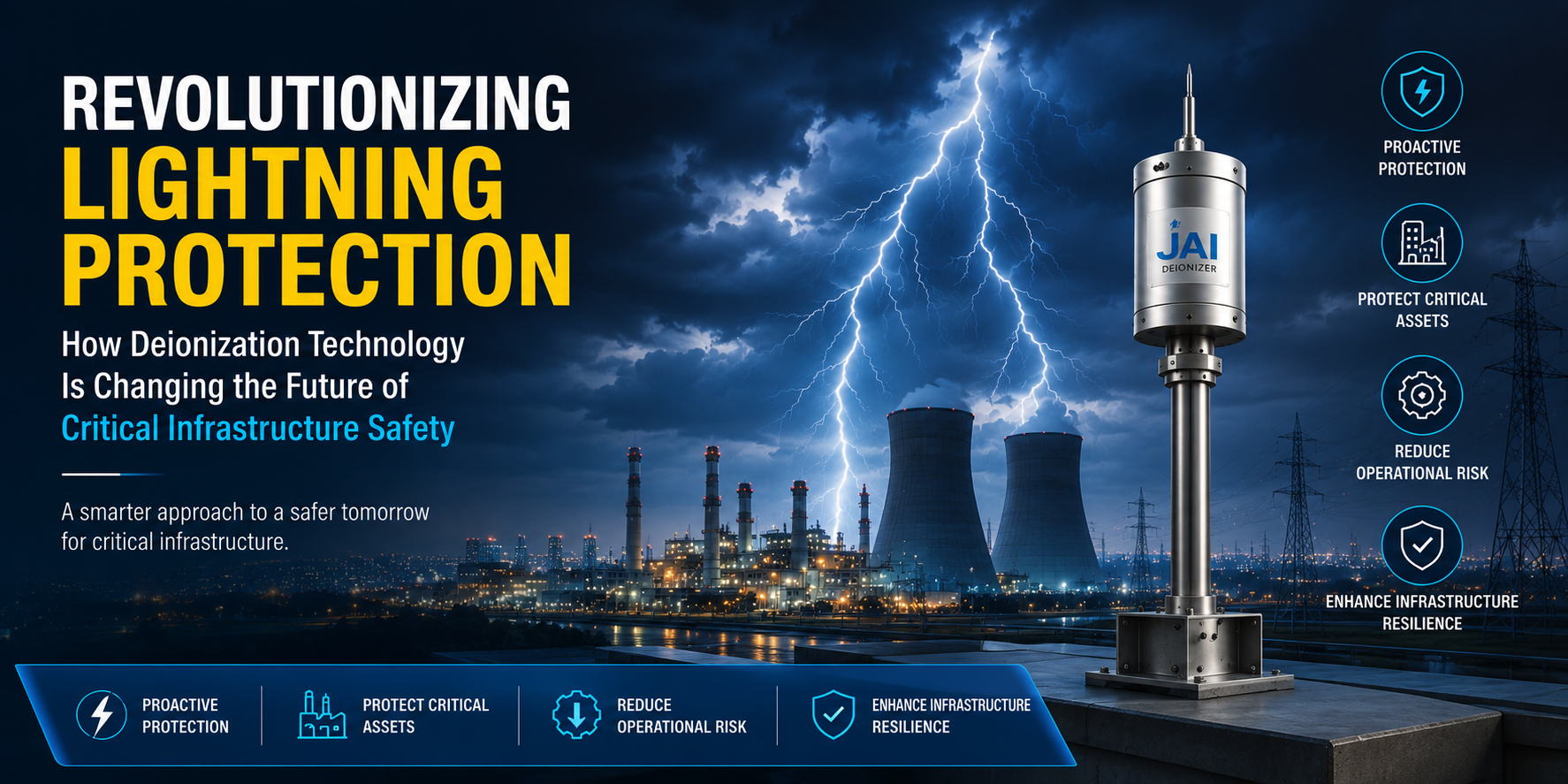
Beyond Conventional Lightning Protection Systems
For operators of power plants, EHV switchyards, mining facilities, industrial complexes, and other critical infrastructure, lightning strikes remain one of the most significant natural threats to operational continuity.
Traditional lightning protection systems, such as Franklin rods and conventional lightning arresters, are designed to intercept and safely conduct lightning strikes to the ground. While effective, these systems are fundamentally reactive — they manage lightning only after a strike has already occurred.
As infrastructure becomes increasingly sophisticated and the cost of downtime continues to rise, industries are now seeking a more proactive approach to lightning protection.
At Jai Enterprises, we believe the future lies not in attracting lightning, but in preventing the atmospheric conditions that allow lightning strikes to occur in the first place.
Introducing Deionization-Based Lightning Protection Technology
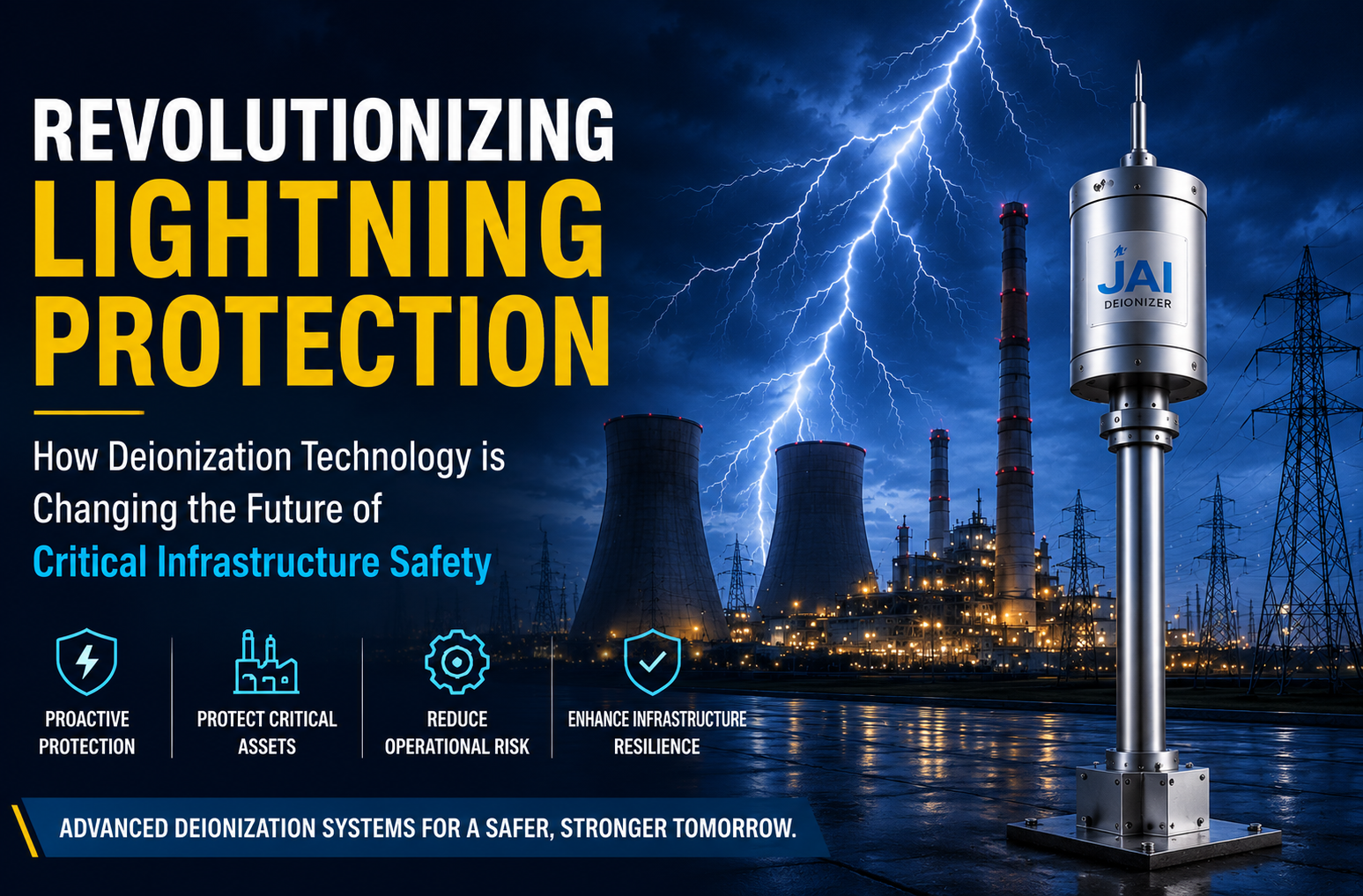
Deionization technology represents a new generation of lightning protection systems.
Unlike conventional lightning rods that attract and conduct electrical discharges, deionizers work by continuously reducing atmospheric electrical charge accumulation around a protected area.
By dissipating the local electric field, the technology helps prevent the atmosphere from reaching the critical breakdown voltage required for lightning formation.
In simple terms, instead of managing a lightning strike after it occurs, deionization technology aims to reduce the likelihood of a strike occurring within the protected zone.
Key Benefits of Deionization Technology
1. Proactive Protection
Works to reduce atmospheric charge accumulation before a lightning strike develops.
2. Protection of Critical Assets
Helps safeguard transformers, switchgear, substations, communication systems, and industrial equipment.
3. Reduced Operational Risk
Minimizes the potential for costly downtime, system interruptions, and equipment replacement.
4. Ideal for Critical Infrastructure
Suitable for:
- Power plants
- EHV substations
- Mining facilities
- Industrial plants
- Commercial complexes
- Sensitive operational installations
5. Long-Term Reliability
Designed for continuous operation in demanding environmental and industrial conditions.
Why Industries Are Looking Beyond Conventional Systems
The principles behind traditional lightning protection systems have remained largely unchanged for centuries. While these systems still play an important role, modern infrastructure demands solutions that address risk proactively rather than reactively.
Deionization technology introduces an innovative approach by focusing on atmospheric charge management, helping organizations strengthen their overall lightning protection strategy while improving infrastructure resilience and operational reliability.
Conclusion
As industries continue to modernize, protection strategies must evolve alongside them.
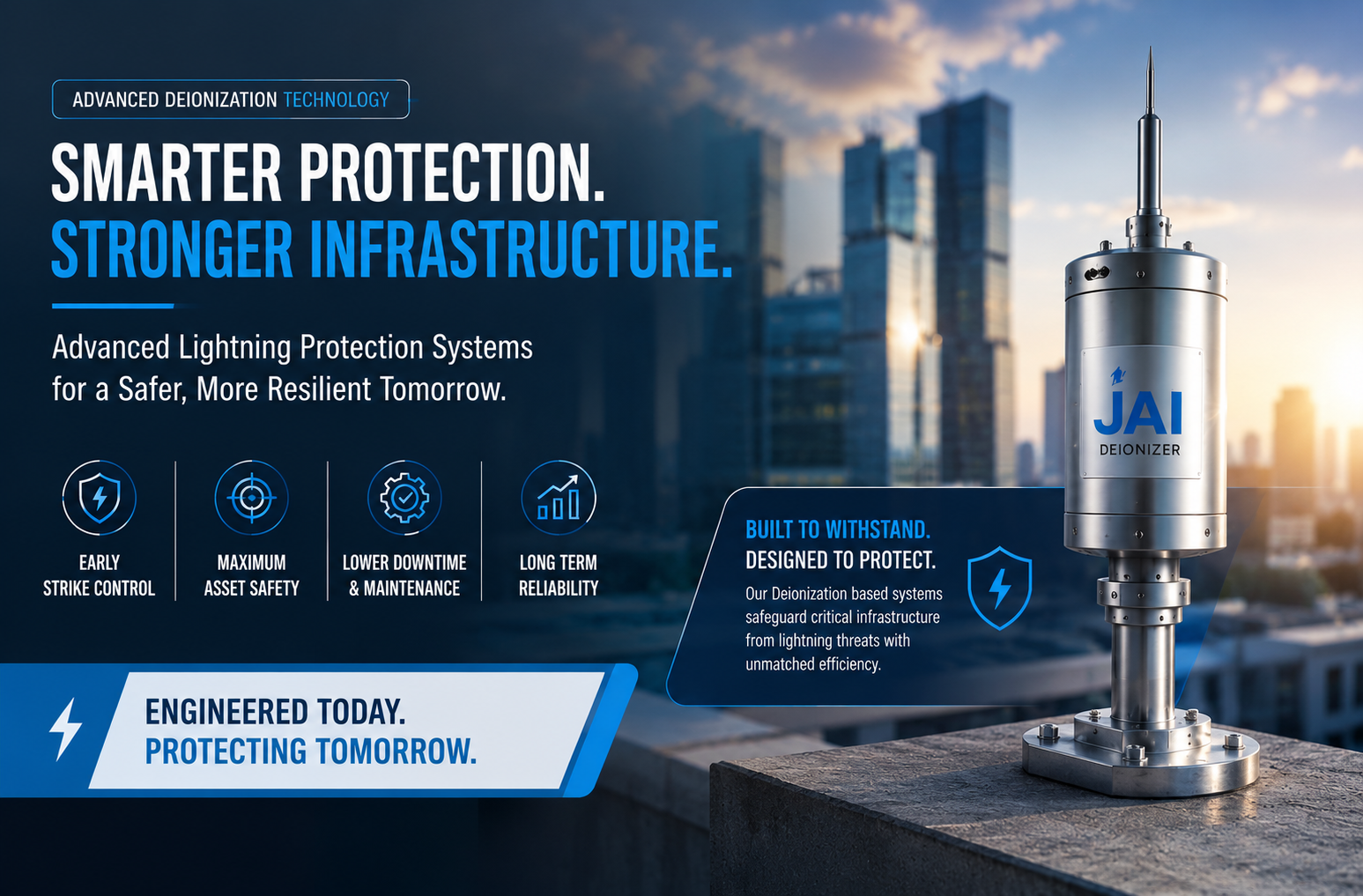
Deionization technology represents a forward-thinking approach to lightning protection — focusing not only on handling lightning strikes, but also on reducing the atmospheric conditions that enable them.
For organizations seeking enhanced protection for valuable assets and critical operations, advanced deionization systems offer a compelling solution for the future of infrastructure safety.
Contact Us
To learn more about our advanced lightning protection solutions and how they can support your operational reliability goals, connect with Jai Enterprises today.