









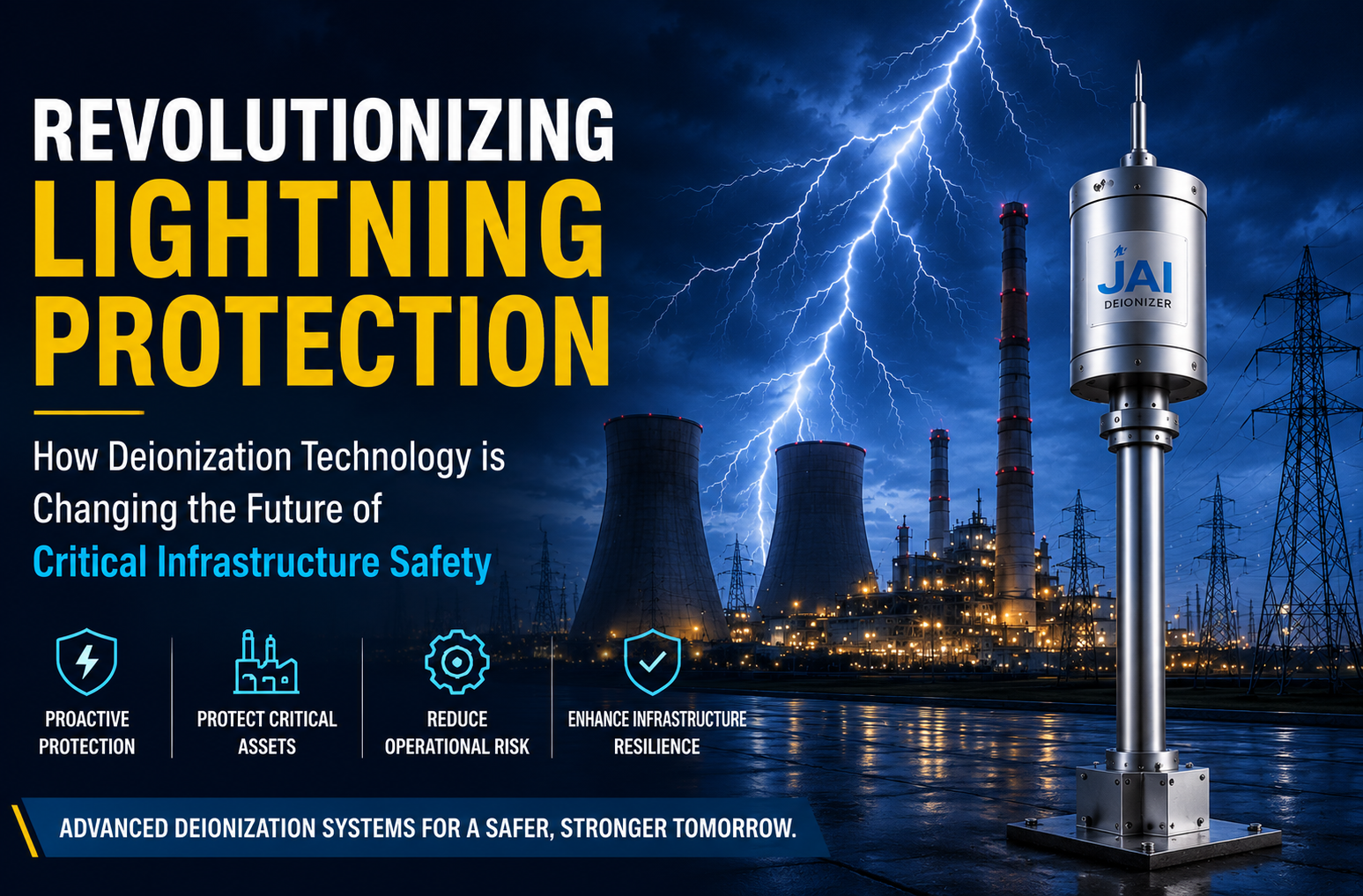
Advanced Lightning Protection Solutions for Modern Infrastructure | Jai Enterprises
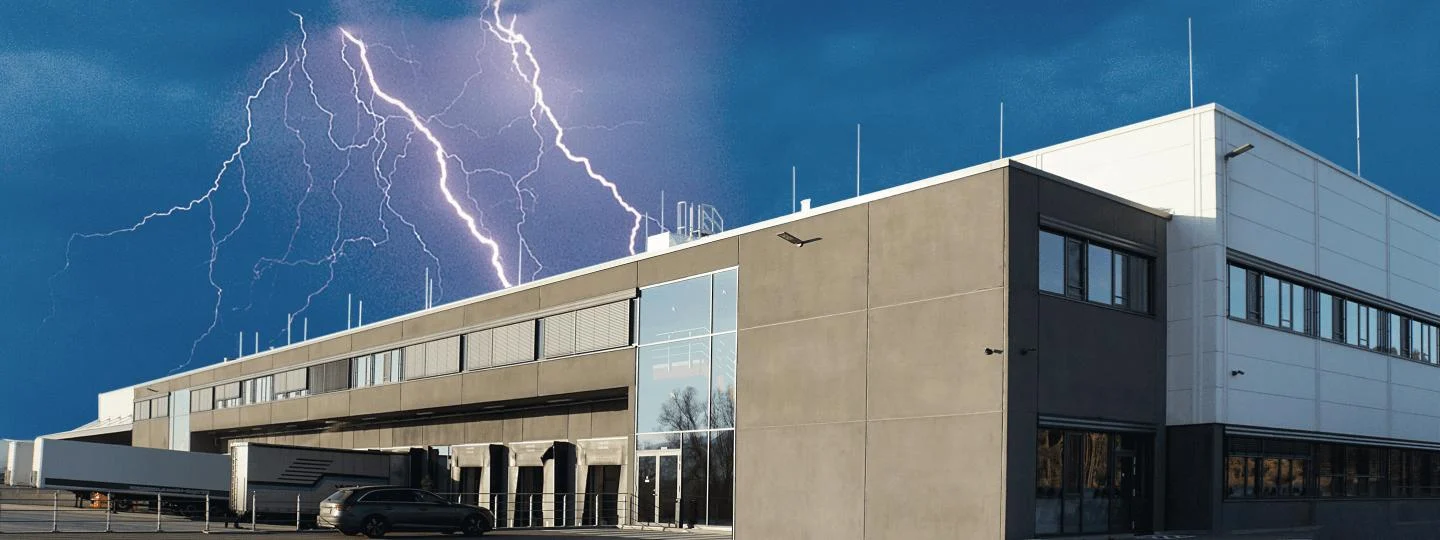
Rethinking Lightning Protection: From Conventional Strike Capture to Advanced Strike Prevention
Is Traditional Lightning Protection Enough for Modern Infrastructure?
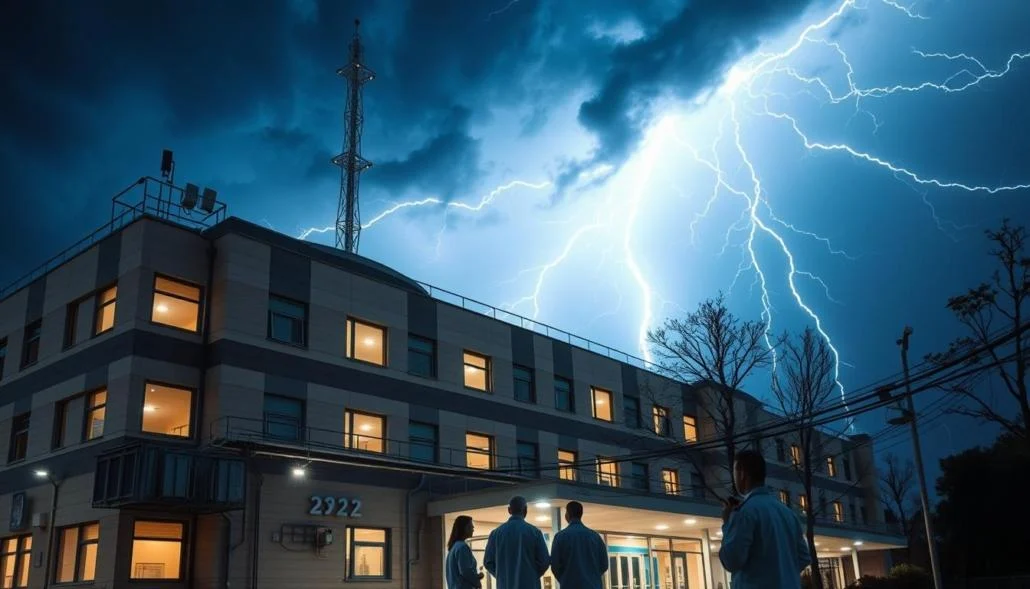
Every year, lightning strikes cause substantial damage to industrial facilities, power plants, hospitals, data centers, telecom infrastructure, manufacturing plants, and commercial establishments across India.
For decades, organizations have relied on conventional lightning protection systems designed to intercept lightning strikes and safely conduct the electrical energy to the ground. These systems have played a vital role in protecting structures from direct physical damage.
However, as modern facilities become increasingly dependent on sophisticated electronics, automation systems, and digital infrastructure, a critical question arises:
Should we simply manage lightning after it strikes, or should we focus on minimizing the conditions that lead to lightning-related damage in the first place?
The answer is driving a new generation of lightning protection technologies that go beyond conventional approaches and focus on improving overall system resilience.
The Challenge with Conventional Lightning Protection
Traditional lightning protection systems operate on a simple and proven principle:
- Capture the lightning strike
- Safely conduct the current to earth
- Protect the structure from direct impact damage
While this method effectively protects buildings from structural damage, the effects of lightning often extend far beyond the strike point itself.
Even when a strike is successfully diverted, facilities may still experience significant secondary effects that can disrupt operations and damage sensitive equipment.
Common Lightning-Induced Risks
- Electromagnetic disturbances
- Voltage surges and transient overvoltages
- Sensitive equipment malfunction
- Production interruptions
- Communication system failures
- Damage to electronic control systems
- Data corruption and system downtime
For industries that depend on uninterrupted operations, these hidden risks can often be more costly than the direct strike itself.
Why Modern Facilities Are More Vulnerable Than Ever
Today's infrastructure relies heavily on interconnected electronic systems that are highly sensitive to electrical disturbances.
A momentary surge caused by nearby lightning activity can affect critical operations even without a direct strike on the facility.
As organizations continue to adopt automation, digital monitoring, and intelligent control systems, the need for advanced lightning protection becomes increasingly important.
Jai Enterprises: Delivering Advanced Lightning Protection Solutions
At Jai Enterprises, we believe that modern infrastructure deserves modern protection.
Our mission is to help organizations improve operational reliability, enhance safety, and reduce the risks associated with lightning-related events.
We work with clients across multiple sectors, including:
- Power Plants
- Manufacturing Facilities
- Hospitals
- Data Centers
- Telecom Infrastructure
- Commercial Buildings
- Industrial Complexes
- Renewable Energy Projects
Our solutions are designed to support continuous operations, protect critical assets, and strengthen infrastructure resilience against environmental challenges.
Why Organizations Are Re-Evaluating Their Lightning Protection Strategy
Forward-thinking organizations are increasingly recognizing that effective lightning protection is not solely about surviving a strike.
It is about:
- Protecting sensitive electronics
- Reducing downtime
- Improving operational continuity
- Enhancing equipment lifespan
- Strengthening business resilience
- Safeguarding critical infrastructure
As technology continues to advance, lightning protection strategies must evolve alongside it.
Conclusion
Lightning protection technology continues to evolve to meet the demands of modern infrastructure.
While conventional lightning protection systems remain an essential component of electrical safety, advanced technologies such as atmospheric charge management and deionization are creating new opportunities to reduce lightning-related risks and improve overall facility resilience.
For organizations seeking greater protection, enhanced reliability, and uninterrupted operations, it may be time to look beyond traditional approaches and explore the future of lightning risk management.
Jai Enterprises
Not Just Protection. Proven Prevention.